

This year, it’s less about show and more about how a home makes you feel. Architect Vicky Cutler helps us unpack the design moves shaping genuinely liveable homes in 2026.

Vicky Cutler is the highly in-demand founder and lead architect of Cutler & Co Architects, formerly known as VThree Architecture. With over 25 years of experience, Vicky has established herself as one of Australia’s most sought-after architects, completing more than 100 residential projects across Victoria, Queensland, and New South Wales.
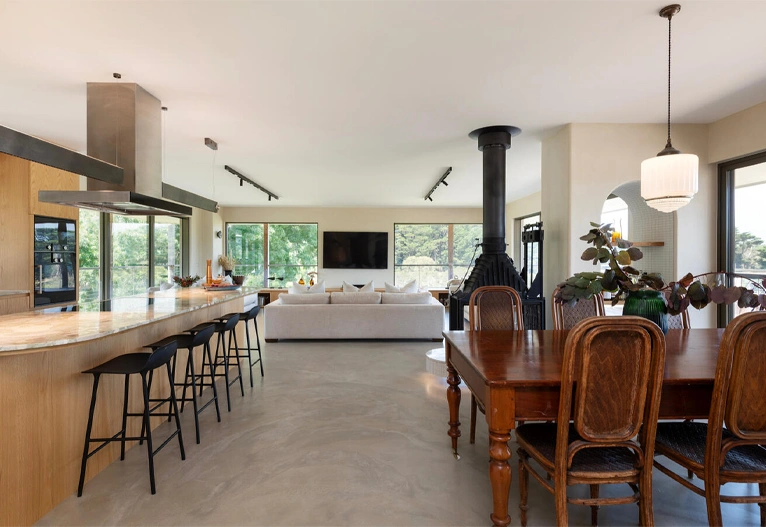
As the calendar turns, the interiors world is quietly but decisively shifting. This year, design leans towards spaces that nurture, welcome and feel truly lived in. Gone are the days of stark whites, glossy surfaces, and artificial materials. The new wave of design favours warmth, tactility, and a softer approach to living that feels both timeless and forward-thinking.
Palettes move from stark to soothing
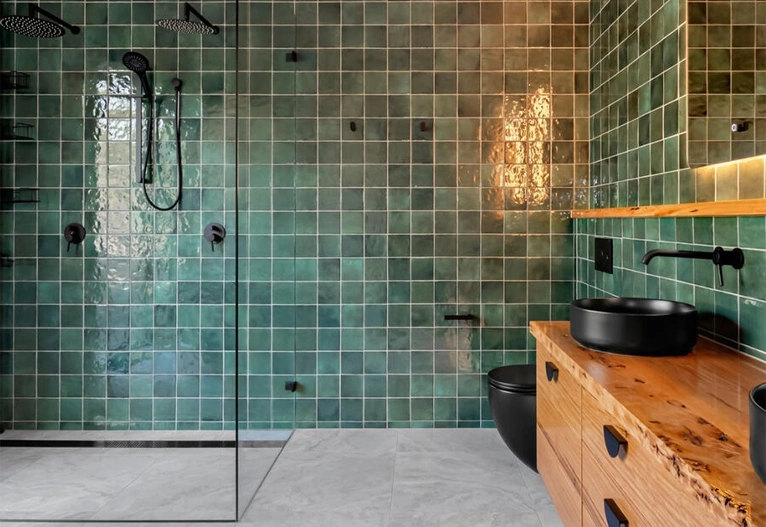
One of the most noticeable shifts this year is in colour.
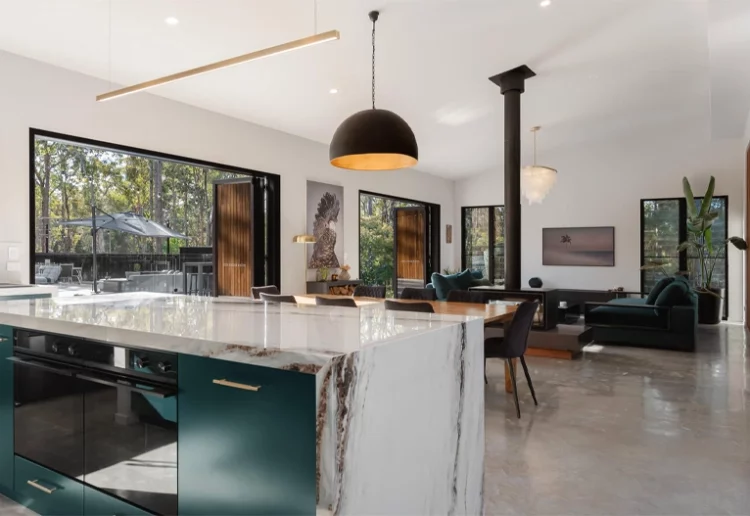
While stark whites and rigid monochromes once dominated, 2026 leans into shades that soothe and ground. Green, in all its forms, is having a moment: from deep jewel-like emerald to the gentlest sage, and even pale eucalypt tones that seem to nod to the Australian landscape. These greens are versatile: bold enough to command attention yet soft enough to provide a quiet backdrop for living.
Warm whites are replacing icy neutrals; creamy, sunlit tones create spaces that feel inviting rather than clinical. Think of Dulux’s Snowy Mountains Half, a white with warmth that welcomes natural light rather than reflecting it harshly.
It’s an understated yet impactful way to make a home feel alive and lived-in, one that reads like an exhale. And dare I say, we all could use more of that.
Materials are honest and textured
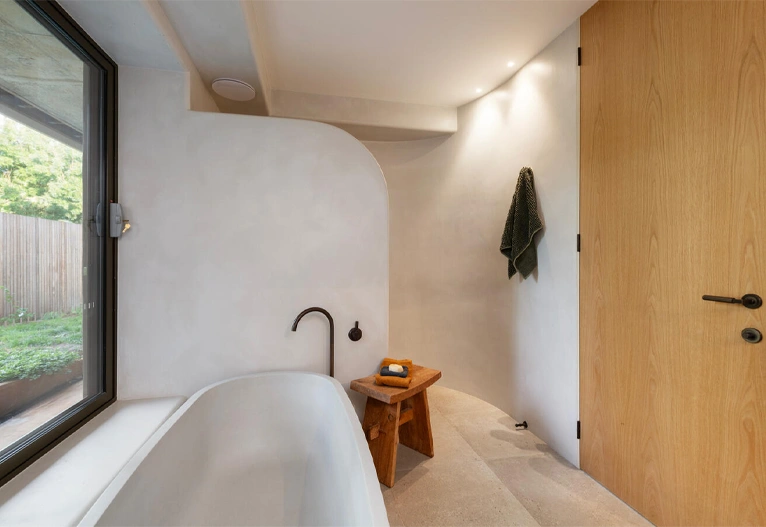
2026 is a celebration of the a-la-natural; travertine, limestone, marble and timber–materials that reveal their true nature–are in. And these aren’t the glossy, polished versions of decades past; they’re honest, textured and tactile.
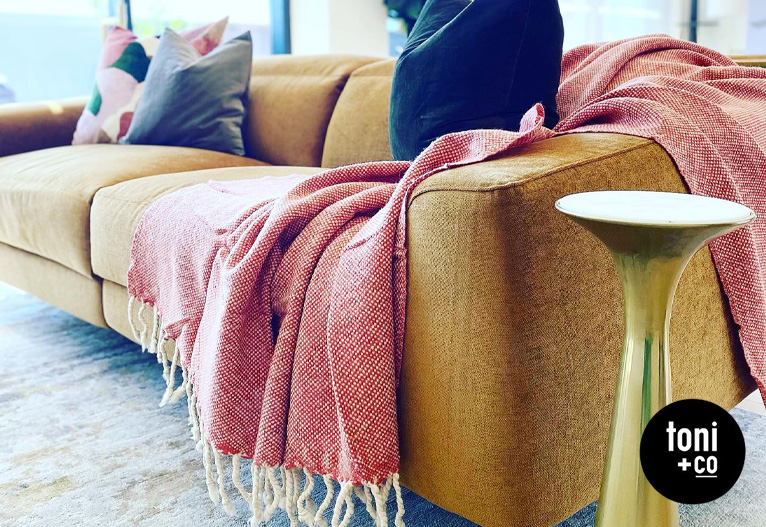
Microcement, limewash and trowelled wall finishes add subtle depth, giving surfaces a narrative of their own. Metals are similarly grounded: aged brass, brushed copper, and warm finishes that catch light without shouting.
Conversely, faux finishes are quietly exiting. Goodbye high gloss cabinets or floor tiles, grey “timber-look” floors and artificial surfaces. They feel dated as we increasingly crave genuineness in our living environments.
It’s all about curves, comfort and flow
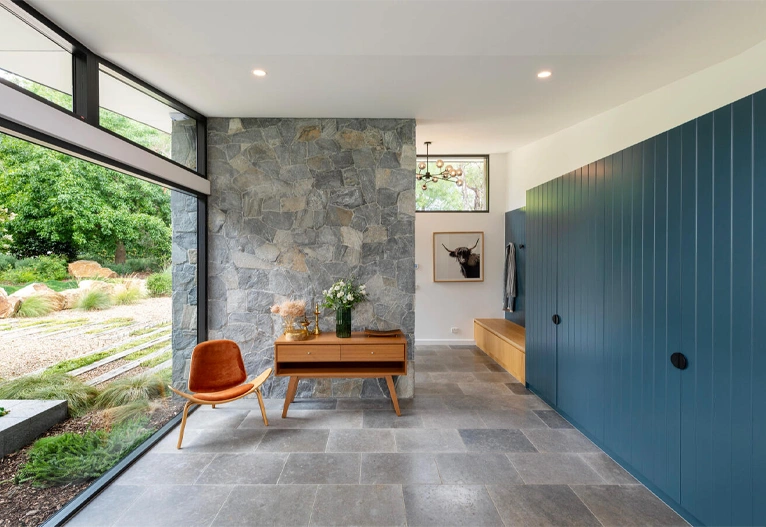
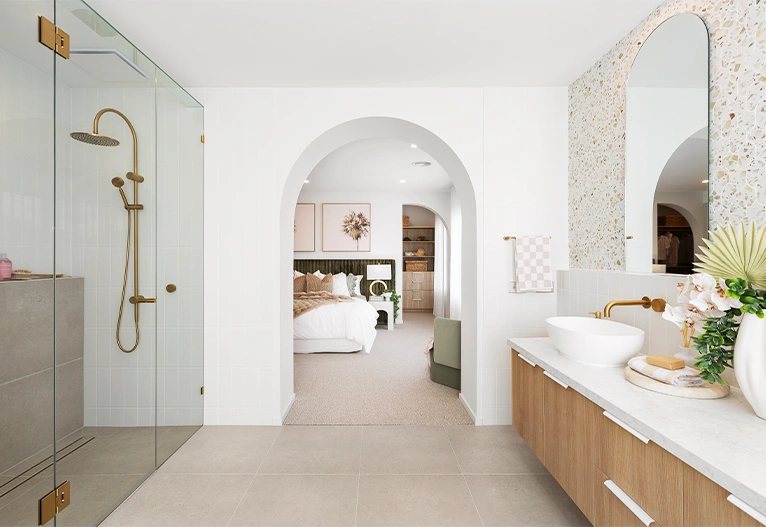
Architecturally, 2026 softens its edges. Arched openings, radius cabinetry and rounded details bring a sense of ease and fluidity to spaces.
Gone are odd angles, two competing living areas, or 2400mm high ceilings. Instead, we see a focus on built-in luxury: window seats, integrated bars, and bespoke banquettes that feel considered and personal.
Hybrid indoor-outdoor living continues to evolve. It’s less about flashy sliding doors and more about creating spaces where the transition from inside to outside feels effortless, functional, and intimate.
Living a calm and considered lifestyle
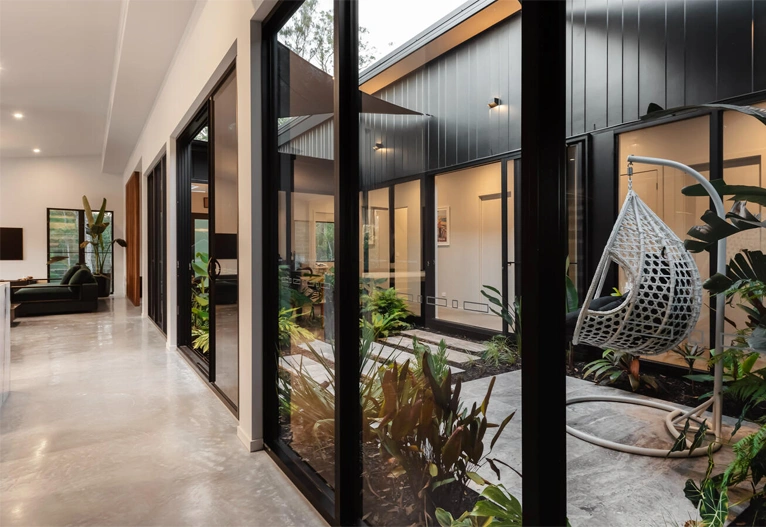
This year, homes are designed to feel like sanctuaries.
Lighting, ventilation, acoustics, and biophilic elements blend seamlessly for a calming effect, creating spaces that nurture rather than overwhelm. Cue collective sigh of relief for our nervous systems.
Organisation is also a priority: butler’s pantries, mudrooms and concealed storage make the practical feel beautiful. It’s a subtle luxury, the kind you live in every day without noticing the extravagance.
What’s fading away are rigid, clinical details. Downlights peppered across ceilings, flat-pack kitchens in high-end homes, and unnecessary corridors are losing favour. These once-modern conveniences now feel impersonal and disjointed in a world leaning toward holistic, wellbeing-driven design.
Less spectacle, more substance
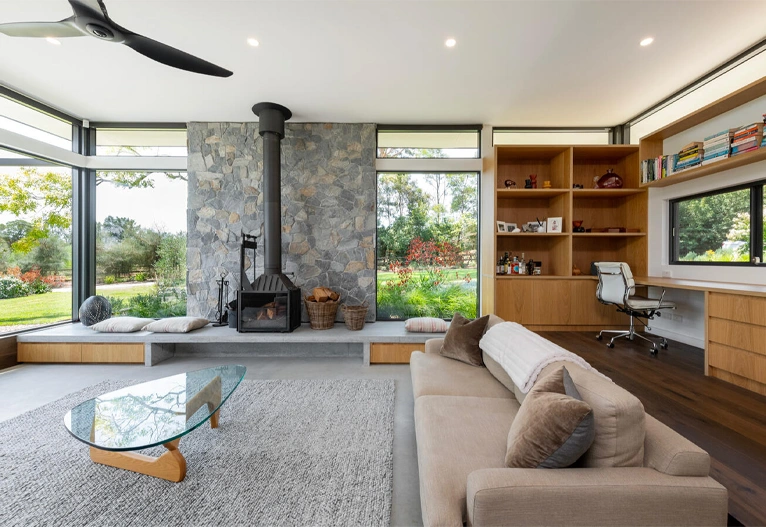
In 2026, we gently pivot toward homes that feel authentically lived in, luxuriously comfortable and intimately connected to the people who inhabit them. It’s a year for thoughtful materials, considered palettes and spaces that genuinely support the rhythm of everyday life.
In the end, it’s not about following trends for their own sake; it’s about crafting a home that feels right in both form and function. Let’s be honest, the measure of truly great residential design is not just in what it looks like, but in how it feels to inhabit every corner of a home.
Top image: Vicky Cutler | Worongary Project
Which of these tips are you desperate to welcome into your own home? Leave us a comment!
-
-
-
ChiWren, QLD
- 28 Feb 2026
-

-
-
MH513900, NSW
- 26 Feb 2026
-

-
-
MH514261, NSW
- 17 Feb 2026
-

-
-
MH514261, NSW
- 11 Feb 2026
-

-
-
El63, QLD
- 05 Feb 2026
Post a commentTo post a review/comment please join us or login so we can allocate your points.